Sunday, June 06, 2010

Outsourcing Pregnancy


Is there any outsourcing need India is unable to meet? Apparently, not, at least when it comes to surrogate pregnancies, according to this very informative Time article:


India has become the world capital of outsourced pregnancies, whereby surrogates are implanted with foreign embryos and paid to carry the resultant babies to term. In 2002 the country legalized commercial surrogacy in an effort to promote medical tourism, a sector the Confederation of Indian Industry predicts will generate $2.3 billion annually by 2012. Indian surrogate mothers are readily available and cheap. Unlike most countries in which surrogacy is lawful — and bucking the norm in heavily bureaucratic India — the procedure can take place without reams of government red tape.

Labels: , ,

Thursday, July 30, 2009

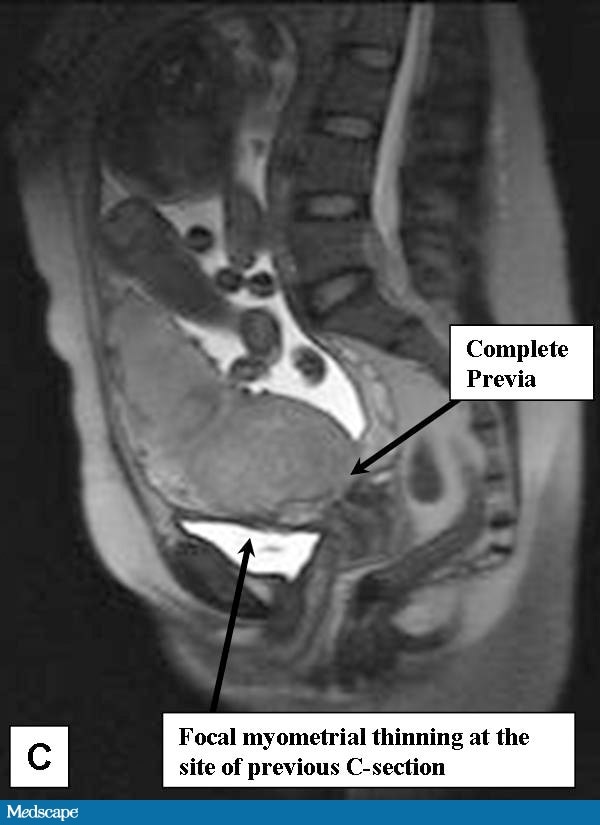
Placenta previa

This is what a placenta previa looks like. Notice how the placenta completely covers the cervical os:

Labels: , ,

Monday, May 04, 2009

Pregnancy and Swine Influenza A (H1N1)

Swine flu cases reached 1,085 worldwide, spreading to every major region of the U.S., Bloomberg reports. So, if you're pregnant, here are a few things about pregnancy and swine flu you should know (adapted from Pregnant women and swine influenza):

Swine flu in pregnancy, what should you expect?

- Pregnant women with swine influenza would be expected to present with typical acute respiratory illness (e.g., cough, sore throat, runny nose) and fever or feverishness.

- Many pregnant women will go on to have a typical course of uncomplicated influenza.

- For some pregnant women, illness might progress rapidly, and might be complicated by secondary bacterial infections including pneumonia.

- Fetal distress associated with severe maternal illness can occur.

- Pregnant women who have suspected swine influenza A (H1N1) virus infection should be tested [specimens from women who have unsubtypeable influenza A virus infections should be sent to the state public health laboratory for additional testing to identify swine influenza A (H1N1)].

Who should receive treatment?

- Pregnant women with confirmed, probable or suspected swine influenza A (H1N1).

- Pregnant women who are close contacts with persons with suspected, probable or confirmed cases of swine influenza A (H1N1).

Note: Pregnancy should not be considered a contraindication to oseltamivir or zanamivir use*.

* Oseltamivir (Tamiflu) and zanamivir (Relenza) are "Pregnancy Category C" medications (no clinical studies have been conducted to assess the safety of these medications for pregnant women. However, no adverse effects have been reported among women who received oseltamivir or zanamivir during pregnancy or among infants born to women who have received oseltamivir or zanamivir.).

What's the treatment for swine flu in pregnancy?

- Oseltamivir (Tamiflu) is preferred for treatment of pregnant women (because of its systemic activity).

- Antiviral treatment should be initiated as soon as possible after the onset of influenza symptoms, with benefits expected to be greatest if started within 48 hours of onset based on date from studies of seasonal influenza.

- Some data from studies on seasonal influenza indicate benefit for hospitalized patients even if treatment is started more than 48 hours after onset.

- Recommended duration of treatment is five days.

- Fever in pregnant women should be treated with acetaminophen (Tylenol).

What's the prophylaxis for swine flu in pregnancy?

- The drug of choice for prophylaxis is less clear.

- Zanamivir (Relenza) may be preferable because of its limited systemic absorption; however, respiratory complications and medication delivery system challenges that may be associated with zanamivir because of its inhaled route of administration need to be considered, especially in women at risk for respiratory problems.

- Recommended duration of treatment for chemoprophylaxis is 10 days.

Note: Oseltamivir and zanamivir treatment and chemoprophylaxis regimens recommended for pregnant women are the same as those recommended for adults who have seasonal influenza.

Breastfeeding

- The risk for swine influenza transmission through breast milk is unknown. However, reports of viremia with seasonal influenza infection are rare.

- Women who are breastfeeding can continue while receiving antivirals. However, women who are ill with swine influenza A (H1N1) should take steps to reduce the risk to their infants, such as frequent hand washing and possibly wearing a mask (see below).

What are some other ways to reduce the risk for pregnant women?

- There is no vaccine available yet to prevent swine influenza A (H1N1).

- The risk for swine influenza A (H1N1) might be reduced by taking steps to reduce the chance of being exposed to respiratory infections, like frequent handwashing, covering coughs and sneezes, and having ill persons stay home, except to seek medical care, and minimize contact with others in the household who may be ill with swine flu.

- Additional measures that can limit transmission of a new influenza strain include voluntary home quarantine of members of households with confirmed or probable swine influenza cases, reduction of unnecessary social contacts, and avoidance whenever possible of crowded settings.

- If used correctly, facemasks and respirators may help reduce the risk of getting influenza, but they should be used along with other preventive measures, such as avoiding close contact and maintaining good hand hygiene. A respirator that fits snugly on the face can filter out small particles that can be inhaled around the edges of a facemask, but compared with a facemask it is harder to breathe through a respirator for long periods of time.

Bottom line: Best thing to do is to avoiding close contact and maintaining good hygiene. If you do get the disease, most likely the course will be mild and self-limiting. And even if it's not, don't panic; effective treatment is available.

Labels: ,

Friday, January 30, 2009

Birth of Octuplets, Who Gets To Decide?


Photo by peagreengirl


Commenting on the woman who recently gave birth to octuplets conceived via ART, Dr. James Grifo, professor of obstetrics and gynecology at the NYU School of Medicine had this to say:

"I don't think it's our job to tell them how many babies they're allowed to have. I am not a policeman for reproduction in the United States. My role is to educate patients."


I couldn't agree more! The job of telling women what pregnancy decisions they are, and are not, allowed to make and of policing female reproduction is the exclusive purview of:

1. Religionists

2. Politicians

3. Strangers who are not the patient's Ob/Gyn

Labels: , , , ,

Saturday, January 17, 2009

Pregnant 92-Year-Old Woman

If you're a 60-year-old fetus you had better have some plans for your retirement:

Doctors treating an elderly Chinese woman for stomach ache were stunned when they found that she had been carrying an unborn child for 60 years.

Ninety-two-year-old Huang Yijun, of Huangjiaotan, revealed that her child had died in the womb way back in 1948, and that she did not have it removed because doctors would charge 100 pounds for the job.


"It was a huge sum at the time - more than the whole family earned in several years so I did nothing and ignored it," the Sun quoted her as saying.

The secret surfaced after Huang hurt her stomach, and went to hospital for a scan.


Now, the clinical history is a bit sketchy but the most likely presumptive diagnosis is a lithopedion (litho = stone; pedion = child), or "stone baby." [Warning, graphic pics!]

Lithopedion [Warning, path specimen!]

A lithopedion is a rare phenomenon with only a few hundred cases report in the medical literature. Usually, a lithopedion occurs after a fetus dies during an ectopic abdominal pregnancy and is too large to be reabsorbed by the body (EGA 14 wks and up).

To shield itself from the degenerating tissue of the fetal foreign body the woman's body will encase the fetus and/or its covering membranes in a calciferous substance.

Believe it or not, forming a lithopedion is a best case scenario. The alternatives, from Williams 21ed, p. 900 (text references omitted):

If the fetus dies before reaching a size too large to be resorbed, it may undergo suppuration, mummification, or calcification. Bacteria may gain access to the gestational products, particularly when they are adherent to intestines, resulting in suppuration. Eventually, the abscess ruptures, and if the woman does not die of peritonitis and septicemia, fetal parts may be extruded through the abdominal wall or more commonly into the intestine or bladder. Mummification and formation of a lithopedion occasionally ensue, and calcified products of conception may be carried for years. There are instances in which a period of 20 to 50 years elapsed before removal of a lithopedion at operation or autopsy. Much more rarely, the fetus is converted into a yellowish, greasy mass to which the term adipocere is applied.


The body is quite an amazing apparatus, no?

Labels: , , ,

Monday, May 19, 2008

Pregnancy Spacing

Birth, pregnancy spacing

Photo by freeparking

If you want to have more than one child, how long should you wait between pregnancies?

According to the results of a study from India, [b]irth intervals of less than 18 months are associated with high risk of stillbirth and neonatal deaths, while [a] birth-to-pregnancy interval of 24 months is optimal.

The researchers conclude:

"Postpartum family planning should be promoted for all women, and methods both for spacing and limiting birth should be widely accessible"....


If the political climate in India is anything like the one here, good luck with translating that recommendation into practice.

Labels: , ,

Saturday, April 26, 2008

You and Your Donor Egg Fetal Cells

Pregnant uterus


Just because you use donor eggs to conceive doesn't mean you don't have a very close biological relation with your child.

Researchers found that foreign fetal cells from donor eggs persist for years in the circulation of recipient mothers:

Dr. Zev Williams from Brigham and Women's Hospital, Boston and colleagues were able to detect DSY14 Y chromosome-specific sequences in the circulation of 5 of 11 (45%) women who had donor egg pregnancies resulting in male offspring, the authors report. An earlier study reported a detection rate of 35% of women who had spontaneous male pregnancies.

The longest interval between delivery of a male offspring and detection of the circulating DSY14 sequence in Dr. Williams' patients was 9 years.

Their findings, the researchers say, "suggest the existence of an immunomodulatory mechanism that results in persistence of microchimerism with evasion of host immune surveillance."


The bad news is that now Congress can expose you for the microchimera that you are and try to ban you out of existence. The good news is that you're in good company, since women who conceive the old fashioned way are also prohibited when a chimera is defined as a human embryo that consists of cells derived from more than 1 human embryo, fetus, or born individual.

Labels: , ,

Thursday, April 24, 2008

Your Brain On Pregnancy

Pregnancy complications

A fluid-attenuated inversion-recovery MRI of a formerly eclamptic patient reveals white matter lesions (arrows). Neuro-Imaging Center of the School of Behavioural and Cognitive Neurosciences in Groningen


If you develop eclampsia [high blood pressure and seizures] during pregnancy, does your brain return to normal postpartum?

Maybe, maybe not, according to recent findings that challenge the current opinion that eclampsia is a one-time event from which women can expect a full clinical recovery.

A study looked at 103 women and found white matter brain lesions in:

- 41% formerly eclamptic women

- 29% formerly preeclamptic women [high blood pressure; no seizures]

- 17% women who had a normotensive pregnancy [normal blood pressure]

Moreover:

The researchers also observed that the number of eclamptic seizures appeared to be related to the presence and severity of the brain matter lesions. In all, 19 eclamptic women had one grand mal seizure, 10 had two, and 10 had three or more. Women who reported three or more eclamptic seizures were three times more likely to have white matter lesions than were women with no seizures, she said.

The total volume of the lesions was significantly greater among formerly eclamptic women than controls (0.04 mL vs. 0.004 mL).

Labels: , ,

Sunday, August 19, 2007

Do You Want To Marry An Infant?

Well, come on down to Arkansas where [a] law passed this year allows Arkansans of any age — even infants — to marry if their parents agree....

According to this new law:

In order for a person who is younger than eighteen (18) years of age and who is not pregnant to obtain a marriage license, the person must provide the county clerk with evidence of parental consent to the marriage.


Here's the background story. Before the new law took effect July 31, girls could get married with parental consent at 16 and boys at 17. Realizing that that's probably a tad too young, the Arkansas legislators wanted to pass a new law to establish 18 as the minimum age to marry.

But, unable to resist the urge to "other" females of reproductive age, no matter how young, the politicians decided to make an exception for pregnant teenagers and allow pregnant teenagers to marry with parental consent. [The logic, if any, for this exception eludes me.]

Anyhow, since legislators are not actually expected to be familiar with, or responsible for, the laws they pass, the politicians missed an extraneous "not" in the bill which allows anyone who is not pregnant to marry at any age if the parents allow it.

Commenting on the new law Sen. Sue Madison had this to say:

I am concerned about pedophiles coming to Arkansas to find parents who are willing to sign a very young child's consent.


Maybe the people of Arkansas would be better served if only there were some concern about the incompetence and poor job performance of those responsible for enacting such a law in the first place.

Labels: ,

Friday, June 29, 2007

Childbirth-Related Costs For Teenagers

Cost of childbirth-related hospitalizations of girls younger than 18 years:

$464,157,600

Who pays for these hospitalizations:

Medicaid - 75%

Private Insurance - 20%

No insurance - 3%

Other - 2%

Labels:

Monday, June 25, 2007

Vaginal Tears and Delivery

Very nice drawings of vaginal tears from the Mayo Clinic (Warning: graphic).

vaginal tear

Labels: ,

Friday, March 19, 2004

Pregnancy And Delivery, Part II

Trish Wilson has more on Ms. Rowland's case [the Utah woman charged with murdering her fetus], mostly from a legal perspective. Very interesting.

One line that made me cringe:

The next morning, the trial court ruled that at 26 1/2 weeks the fetus was viable.

I said it before, and I'll say it again: if you want to practice medicine, but don't want to spend years in school/doing scut work in a hospital while accumulating over $100,000 in student loans, become a politician or a lawyer.

Labels: , ,

Saturday, March 13, 2004

Pregnancy And Delivery

When it comes to pregnancy and delivery, should women be allowed to make medical decisions?

I'm writing a book for women. The topic has nothing to do with pregnancy, deliveries, abortions, or fetal rights. (It's about period management--what women can do to control their periods. Hence the title of my blog, in case you were wondering.)

The basic idea behind the book is that women can and should be able (not to mention, trusted) to make and participate in decisions about their life and health. The final draft absolutely, positively must be ready in 2 weeks. This means I have no business doing anything else but working on my draft. Of course, that didn't stop me from checking out a few blogs, to catch up on the news and make sure there's still a world out there. During my meanderings (bloganderings?) I came across Utah Woman Charged With Murdering Fetus and just had to read it. Big, huge mistake!

Once again, my theory that, when it comes to making decisions about their lives and health, women are treated like incompetent buffoons has been confirmed. And then some!

My first instinct, after reading the article, was to run outside and explain to any passers-by why what I'd just read was so unbelievable. However, I didn't do that because I'm the reserved type. And also because I still remember, from the days when I wasn't glued to my computer, that harassing perfect strangers on the street with ones ruminations is frowned upon. Luckily, doing the exact same thing to virtual perfect strangers is encouraged, so here I go.

The gist of the article:

As Melissa Ann Rowland's unborn twins got closer to birth, doctors repeatedly told her they would likely die if she did not have a Caesarean section. She refused, and one later was stillborn.

Authorities charged 28-year-old Rowland with murder on Thursday, saying she exhibited "depraved indifference to human life," according to court documents.


Also from the article, Kent Morgan (the spokesman for the district attorney):

"We are unable to find any reason other than the cosmetic motivations by the mother" for her decision [no to have a C/S--ed.], Morgan said.

Mr. Morgan and the DA for which he speaks are either incompetent or malevolent.

A Cesarean Section (C/S) is a major surgical procedure. You can die from anesthesia-related or surgery-related complications, and you can suffer significant morbidity.

A C/S significantly increases a woman's risk of pregnancy-related death (35.9 deaths per 100,000 deliveries with a live-birth outcome) compared to a woman who delivers vaginally (9.2 deaths per 100,000).

Granted, in the U.S. maternal death associated with cesarean delivery is rare. A 1980 study reported a series of 10,000 consecutive C/S with no maternal deaths. A 1988 study noted only 7 deaths associated with over 121,000 C/S. Finally, a 1990 study, while documenting a sevenfold relative risk for maternal death associated with cesarean delivery, observed that most deaths were associated with complicated nonelective procedures.

What's not rare is the maternal morbidity. From Williams Obstetrics:

There is no doubt that maternal morbidity is increased dramatically in cesarean compared with vaginal delivery.

Some of the complications associated with having a C/S:

- hysterectomy (surgical removal of the uterus)

- operative injury to near-by organs (bladder, intestines)

- uterine infection (endomyometritis)

- significant, active blood loss (hemorrhage)

- blood clot complications (thromboembolism)

- urinary tract infections

- wound infections

- infection with the "flesh eating" bacteria (necrotizing fasciitis)

So, although I don't know the particulars of the situation described in the article, I can unequivocally tell you that for any woman faced with having to have a C/S, "cosmetic motivations" are never the only consideration. [The risks of a C/S exist independent of the DA's ability to locate them!]

Also, in the article:

The same day, a nurse at Salt Lake Regional Hospital saw Rowland, who allegedly told her she had left LDS Hospital because the doctor wanted to cut her "from breast bone to pubic bone," a procedure that would "ruin her life."

and

Prosecutors said Rowland didn't want to be scarred, and one nurse told police that Rowland said she would rather "lose one of the babies than be cut like that."

and, finally

Caesarean sections usually involve delivery through a surgical incision in the abdomen and front wall of the uterus. Dr. Christian Morgan, a family practice doctor who regularly performs C-sections at the University of Utah Health Sciences Center, said he had never seen vertical skin incisions performed at LDS Hospital for a first-time C-section.

"Even when you need to get a baby out in minutes, it can still be done in the bikini incision," Christian Morgan said.


Here's the informed translation:

-- Pregnant woman, carrying twins, comes in complaining of decreased fetal movement.

-- History/Physical/Tests are done and the recommendation is for an immediate delivery (that's the nonelective kind of C/S, the one associated with the highest risk of maternal mortality and morbidity).

-- MD explains the procedure, as well as the benefits/risks involved. MD mentions the possibility of a vertical skin incision ("up and down"..."from breast bone to pubic bone").

[The reason you do a vertical incision is because it's the quickest way to reach a distressed fetus. One cut from skin to uterus, one cut on the uterus, fetus is out. You can't do that with a Pfannenstiel ("bikini') incision because you risk injuring the urinary bladder.]

-- Woman tries to express her concerns about the surgery and is made out to sound callous (to put it mildly) by people around her/reporter.

-- Woman elects not to undergo procedure (one fetus dies, one lives). [I can't tell from reading the article, but it's possible that, after hearing about the complications associated with a vertical incision, Ms. Rowland thought that by refusing a C/S she would save herself and her pregnancy.]

-- The DA charges woman with committing murder. [Note to DA: just because you weren't able to find any reason other than the "cosmetic motivations", doesn't mean they don't exist. Pick up a book...or at least google.]

-- Dr. Morgan regales us with a personal anecdote which highlights his powers of observation. [Just so that Dr. Morgan isn't the only one admonished for using anecdotes instead of data, let me join him for a moment. I've done hundreds of C/S. I can do them in my sleep. I've seen the benefits and speedy, uneventful recoveries (most patients) and I've seen the risks (including the patient dying on the table). Had I been Ms. Rowland's physician I, and, without a doubt, any of my colleagues, would've talked/explained/pleaded/sung/drawn pictures/mimed/laughed/scolded/educated/jumped up and down and then some more. I would've done anything in my power to inform her and convince her to have that C/S. However, I would have never, ever forced her to have it.]

My point:

Nowhere in the article does it say this woman is not legally competent. And, yet despite the fact that she's an adult, she's charged with murder for refusing to undergo an operation that could kill her and her pregnancy.

My question:

At a minimum, when faced with life and death options, shouldn't women be allowed to make their own [informed] decisions, instead of being charged with murder?

UPDATE: More on the case, here.


Williams Obstetrics 21st ed. p545


(via Drudge)

Labels: , ,