Placenta previa
This is what a placenta previa looks like. Notice how the placenta completely covers the cervical os:
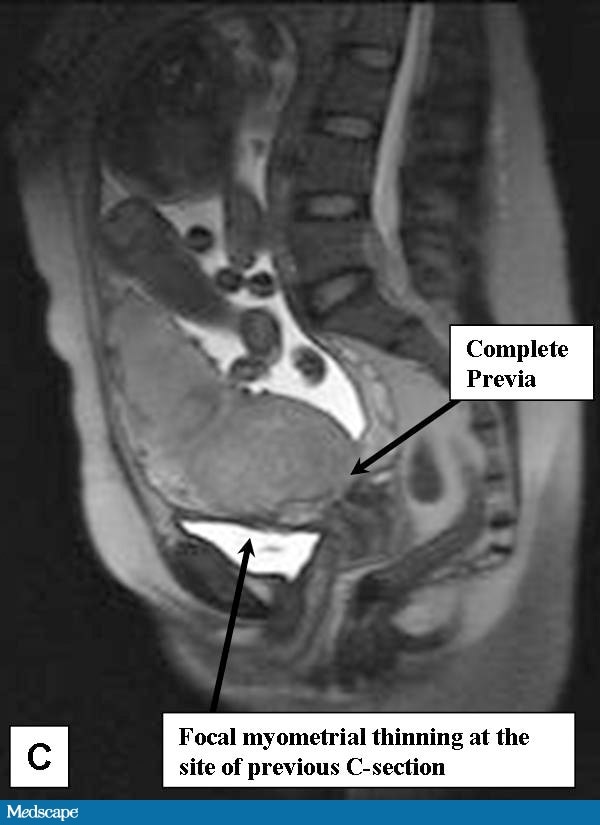
Labels: Placenta previa, Pregnancy, Pregnancy Risk
posted by ema @ 11:52 PM
0 comments


Helping you be healthy.
This is what a placenta previa looks like. Notice how the placenta completely covers the cervical os:
Labels: Placenta previa, Pregnancy, Pregnancy Risk
posted by ema @ 11:52 PM
0 comments

"I don't think it's our job to tell them how many babies they're allowed to have. I am not a policeman for reproduction in the United States. My role is to educate patients."
Labels: ART, octuplets, Politics, Pregnancy, Pregnancy Risk
posted by ema @ 11:30 PM
0 comments
If you're a 60-year-old fetus you had better have some plans for your retirement:
Doctors treating an elderly Chinese woman for stomach ache were stunned when they found that she had been carrying an unborn child for 60 years.
Ninety-two-year-old Huang Yijun, of Huangjiaotan, revealed that her child had died in the womb way back in 1948, and that she did not have it removed because doctors would charge 100 pounds for the job.
"It was a huge sum at the time - more than the whole family earned in several years so I did nothing and ignored it," the Sun quoted her as saying.
The secret surfaced after Huang hurt her stomach, and went to hospital for a scan.
If the fetus dies before reaching a size too large to be resorbed, it may undergo suppuration, mummification, or calcification. Bacteria may gain access to the gestational products, particularly when they are adherent to intestines, resulting in suppuration. Eventually, the abscess ruptures, and if the woman does not die of peritonitis and septicemia, fetal parts may be extruded through the abdominal wall or more commonly into the intestine or bladder. Mummification and formation of a lithopedion occasionally ensue, and calcified products of conception may be carried for years. There are instances in which a period of 20 to 50 years elapsed before removal of a lithopedion at operation or autopsy. Much more rarely, the fetus is converted into a yellowish, greasy mass to which the term adipocere is applied.
Labels: Ectopic, Lithopedion, Pregnancy, Pregnancy Risk
posted by ema @ 4:52 PM
14 comments

We never planned how many children to have. We just let God guide our lives, you know, because we strongly believe life comes from God and that's the reason we did not stop the life," said Alexandru Ionce.
Labels: Abortion, Canada, Livia Ionce, Politics, Pregnancy Risk
posted by ema @ 5:10 PM
0 comments

"Postpartum family planning should be promoted for all women, and methods both for spacing and limiting birth should be widely accessible"....
Labels: India, Pregnancy, Pregnancy Risk
posted by ema @ 11:05 PM
3 comments

The researchers also observed that the number of eclamptic seizures appeared to be related to the presence and severity of the brain matter lesions. In all, 19 eclamptic women had one grand mal seizure, 10 had two, and 10 had three or more. Women who reported three or more eclamptic seizures were three times more likely to have white matter lesions than were women with no seizures, she said.
The total volume of the lesions was significantly greater among formerly eclamptic women than controls (0.04 mL vs. 0.004 mL).
Labels: Eclampsia, Pregnancy, Pregnancy Risk
posted by ema @ 4:03 PM
0 comments
When it comes to women dying from complications of pregnancy or childbirth, that is:
WASHINGTON (Reuters) - The United States has a sharply higher rate of women dying during or just after pregnancy than European countries, even some relatively poor countries such as Macedonia and Bosnia, according to the first estimates in five years on maternal deaths worldwide.
The report released by various United Nations agencies and the World Bank on Friday shows that Ireland has the lowest rate of deaths, while several African countries have the worst.
The United States has a far higher death rate than the European average, the report shows, with one in 4,800 U.S. women dying from complications of pregnancy or childbirth, the same as Belarus and just slightly better than Serbia's rate of one in 4,500.
Just one out of 47,600 women in Ireland die during or just after childbirth, the report found. Bosnia had the second-lowest rate, with 1 in 29,000 women dying during pregnancy and childbirth.
"Among the ten top-ranked European and other industrialized countries, where women are guaranteed good-quality health and family planning services that minimize their lifetime risk, fewer than one in 16,400 will die from complications of pregnancy and childbirth," the United Nations, which issued the report along with the World Bank, said in a statement.
...
The report, published in the Lancet medical journal, places the United States 41st among 171 countries.
The four lowest-ranked countries in the report are Chad, with 1 in 11 women dying in pregnancy or childbirth, Afghanistan and Sierra Leone with one in eight, and Niger losing one in seven mothers.
...
According to the U.S. National center for Health Statistics, about 6 million U.S. women get pregnant every year. Four million children are born, about 1 million pregnancies end in miscarriages and another 1 million in induced abortion.
The major direct causes of U.S. pregnancy-related deaths are blood clots, hemorrhage, complications of medical conditions, and eclampsia and pre-eclampsia, which are marked by dangerously high blood pressure.
The death rate among U.S. black women was nearly four times the rate found among non-Hispanic white women -- 34.7 deaths per 100,000 live births for blacks versus 9.3 per 100,000 live births for whites, the report said.
Labels: Abortion, Pregnancy Risk
posted by ema @ 9:12 PM
0 comments
An interesting article about a possible side effect of pregnancy:
[B]lood banks are beginning to separate out women's plasma — the liquid part of blood — in an effort to fight a mysterious lung injury that has become the nation's leading risk from transfusions.
Ask about blood safety and most people think of HIV or other diseases that, thanks to strict testing, actually are incredibly rare in U.S. transfusions. Today the top threat is TRALI, or "transfusion-related acute lung injury," in which transfusions trigger reactions that fill patients' lungs with fluid, leaving them gasping for air.
There are no good counts, although TRALI is thought to strike a few hundred people a year and kill roughly 10 percent of them. It's a condition doctors don't always recognize since patients who need transfusions are seriously sick to begin with, but it's starting to gain attention.
...
No one knows exactly what causes TRALI. But certain immune cells carried by women who have been pregnant are emerging as a chief culprit, cells called antibodies that mothers-to-be produce in reaction to their fetus' foreign father cells.
The antibodies do no harm to mother, baby or the vast majority of people who encounter them in a transfusion. To get TRALI requires what Celso Bianco of America's Blood Centers calls "a horrible coincidence" in which the transfusion recipient has white blood cells that just happen to recognize and clash with the donor's antibodies.
The perception or fear that, nowadays, infections represent the most frequent cause of serious complications associated with transfusions of blood or blood derivatives may be unfounded. As illustrated by the causes of the few fatalities occurring after a transfusion that were reported to the US Food and Drug Administration (FDA) before 1995, hemolytic reactions (mostly due to ABO incompatibilities) represented the leading cause of death (50% to 62%), while respiratory syndromes represented the second leading cause (15% of fatalities). Bacterial contamination followed in the third place with a 10% to 16% frequency over the past 25 years.
Since the introduction of nucleic acid testing in 1999, transfusion-related viral infections have become a rare event -- only 3 documented cases per year. The specific risks have been calculated as follows: 1/205,000 transfusions for hepatitis B, 1/1,935,000 for hepatitis C, 1/2,135,000 for HIV 1 and 2 infections, and 1/2,993,000 for HTLV infections.
TRALI is Underrecognized
The respiratory distress syndrome associated with transfusions, called TRALI (transfusion-related lung injury), on the other hand, constitutes a serious risk that may be presently underestimated, as it often goes unrecognized and undertreated. Currently, at least 6 deaths per year are being formally attributed to TRALI. The actual prevalence is, however, probably far higher with an estimate of about 200 patients per year being affected.
According to detailed studies, TRALI might occur in 1/5000 transfusions, or as frequently as 1/300 transfusions of red blood cell derivatives. Others reported a frequency of 1/1323 in a recent study. Approximately 12 million transfusions are given per year in the United States. Something is amiss when only 6 cases of TRALI are officially diagnosed and reported. Data obtained in the United Kingdom from the SKOT (a confidential voluntary reporting system) seem to be aligned with this trend. Eighteen cases of acute lung injuries have been reported in 2000, ranking TRALI as the second most frequent cause (6 deaths) of transfusion-related complications after hemolysis.
...
Treatment and Prognosis of TRALI
Treatment of TRALI requires interruption of the transfusion and ventilation with hemodynamic support. Diuretics and corticosteroids should not be given. Blood products should not be withheld if there is clinical indication. The risk of recurrence for TRALI is unknown, but it is being estimated at approximately 10%. The vast majority of cases, more than 80%, resolve within 96 hours with ventilatory support. With appropriate treatment, resolution is generally complete and no residual damages are observed in patients.
Etiopathogenesis
Which blood products may induce TRALI in a patient? Most, if not all, blood products have been linked to TRALI: whole blood, red blood cells, platelets (whole blood- or apheresis-derived), and granulocytes. TRALI has been found to be only rarely associated with administration of cryoprecipitates and intravenous immunoglobulins. Plasma, on the other hand, seems to be the blood product most frequently associated with TRALI, particularly units that contain more than 100 mL of plasma.
Donor-Derived Antibodies
Two, nonmutually exclusive, theories are being investigated as the possible cause of this respiratory syndrome feeding a bit into a climate of controversy. According to some investigators, donor-derived antibodies present in the transfused products react with the recipients' own blood cells, inducing release of inflammatory mediators. Anti-HLA antibodies are the most frequently "indicted" inducers in this category.
...
Multiparous women are very good long-term blood donors, but owing to the multiple pregnancies, they may develop higher than usual titers of HLA antibodies to the fetal HLA antigens of paternal origin. Generally, only approximately 8% of the general population has detectable antibody titers vs more than 20% of multiparous women with more than 2 pregnancies. Does this etiopathogenetic theory imply that this donor group may carry a higher risk of inducing TRALI in the recipients?
A retrospective study published by Kopko and colleagues seems to suggest that, at times, there may be a correlation. In this study, the clinical histories of 50 recipients of blood transfusions from a 54-year-old multiparous woman (3 pregnancies) were evaluated retrospectively. Fifteen of the 36 evaluable recipients had developed transfusion-related respiratory complications: 7 with mild to moderate symptoms and 8 with a severe reaction. TRALI was formally diagnosed and reported only in 2 of these patients. In another investigation, 102 recipients of more than 2 units of plasma (FFP) prepared from multiparous women were studied retrospectively for complications. A total of 5 transfusion-related reactions had been reported, and only 1 as TRALI. These data are, however, of limited usefulness as antibodies titers and specificities were not evaluated in these recipients/patient combinations.
...
Donor-Derived Lipids
The second theory mainly advocated by a single research group for the pathogenesis of TRALI points to lipids as the inducers of this syndrome. The presence of such lipids would increase over time in the donors' units, leading to accumulation of biologic mediators able to induce TRALI upon transfusion. Cell-rich blood products rather than plasma would thus carry the highest risk of transfusion reactions. The presence of lipid mediators would also be associated with autologous transfusions (transfusions of the patients' own blood cells or plasma). According to this hypothesis, the longer the storage, the higher the risk of developing TRALI.
A clinical case that might be ascribed to a lipid-induced TRALI is, in fact, that of the "autologous" TRALI. In this case, a 62-year-old man undergoing radical prostatectomy received 2 units of autologous blood (18 and 25 days old, respectively). After transfusion of the second unit, the patient experienced marked hypotension and hypoxemia. Symptoms resolved after interruption of the transfusion. No cardiac dysfunction and no volume overload were observed. The presence of bioactive lipids was later documented in the stored red blood cell units.
Practical Implications
Thus, according to the experimental results reported so far, both explanations may account for the occurrence of lung injury during TRALI. The relative role of each mechanism in the induction process is, however, being hotly disputed. While researchers investigating the pathogenetic role of antibodies report that up to 50% of TRALI cases appear to be antibody-mediated, Silliman's group found antibodies only in approximately 4% of cases claiming that the lipid priming activity would be responsible for most of the TRALI cases observed.
...
More data would also shed light on questions that are, at the moment, unanswered, but that could influence standards of practice in transfusion medicine. Should donors be screened for the presence of leukoagglutinins? Should each unit be tested before transfusion for the presence of antibodies or lipid mediators? Should reverse lymphocyte crossmatches be performed?
As pointed out by Dr. Eder, the lack of agreement on the cellular and molecular mechanisms underlying the development of TRALI renders the task of improving the safety of blood transfusion far more complex and potentially more expensive.
...
Two types of transfusions that are frequently perceived as "safer" by the general public may carry, in fact, a higher risk of TRALI: autologous components and maternal transfusions. While autologous transfusions would not be advisable on the basis of the long-term storage theory, maternal transfusions are contraindicated in some cases, owing to the high chance of having matching anti-HLA antibodies directed to the child's antigens of paternal origin, particularly after the second pregnancy (if the 2 children have the same biological father).
While we wait for a resolution of this etiopathogenetic controversy, more accurate diagnoses, a closer monitoring of patients, and a timely delivery of appropriate treatment will certainly help in making TRALI less of a burden in the posttransfusional setting.
Labels: Pregnancy Risk, TRALI
posted by ema @ 9:05 PM
2 comments
Interesting article on reproductive risks by Dr. Trussell in Contraception. [Not sure if you can access the article without a subscription, so I'll quote in full.]:
Dramatic headlines about women's health — deaths of women using the OrthoEvra patch, for example, or after medication abortion — can quickly lead patients and healthcare practitioners into a state of panic and uncertainty over the appropriate course of action to take. Should therapy be continued or not? What is the real risk of death?
Alarmist, misleading, inaccurate or incomplete media coverage is certainly a source of confusion, but such stylized reporting is not likely to be eliminated from most large media outlets in the near future. That fact, coupled with the lack of courses in biostatistics and risk-assessment analysis in most medical training programs and the reality that health professionals have little time to counsel patients about the risks of various treatments, can lead patients to make poor health-related choices.
This danger is particularly worrisome when patients are dealing with contraceptive issues and the threat of an unplanned pregnancy. Doctors, nurses and other providers have little time to investigate and consolidate risk-related information for their patients, and patients have few resources available to help them ascertain the risks from using various contraceptive methods. The brief summary provided here is intended to help inform clinicians and their patients of the risk of death from pregnancy, abortion and the use of various forms of hormonal contraception, as well as from other voluntary activities.
In general, contraceptives pose few serious health risks to users. Moreover, the use of contraceptive methods is generally far safer than pregnancy. Unintended pregnancies unnecessarily place women at risk. Women in many developing countries will experience an even greater advantage in using contraceptive methods than those in the developed world in comparison with pregnancy-related mortality. Nonetheless, use of some contraceptive methods may entail potential risks.
• Use of the method may lead to serious outcomes such as death, hospitalization, surgery, medical side effects, infections, loss of reproductive capacity or pain.
• Contraceptive failure (pregnancy) is associated with risk: a woman must assess the likelihood of contraceptive failure and the dangers that a pregnancy would pose.
• Future fertility may be influenced by choice of a contraceptive method.
When it comes to the most serious outcome of all — death — the absolute level of risk is extraordinarily low for most women. Table 1 puts into perspective some of the risks of everyday life in the United States [1–9]. Other major health risks from contraceptive use are not only uncommon, but they are also most likely to occur in women who have underlying medical conditions.
 | Activity | Risk of death | Source | |
|---|---|---|---|---|
| Risk per year | | ||
| While skydiving | 1 in 1000 | Laudan [1] | |
| From an accident | 1 in 2900 | | |
| From an automobile accident | 1 in 5000 | | |
| From a fall | 1 in 20,000 | | |
| From a fire | 1 in 50,000 | | |
| From riding your bicycle | 1 in 130,000 | | |
| In an airplane crash | 1 in 250,000 | | |
| From being struck by lightning | 1 in 2,000,000 | | |
| Risk per year for women preventing pregnancy | | ||
| Using OCs | Schwingl et al. [2] | | |
| Nonsmoker | | ||
| Aged 15–34 years | 1 in 1,667,000 | | |
| Aged 35–44 years | 1 in 33,300 | | |
| Smoker | | ||
| Aged 15–34 years | 1 in 57,800 | | |
| Aged 35–44 years | 1 in 5200 | | |
| Undergoing tubal sterilization | 1 in 66,700 | Escobedo et al. [3] | |
| Risk per year from using tampons | 1 in 5,734,000 | Hajjeh et al. [4]; U.S. Census Bureau [5] | |
| Risk from pregnancy | 1 in 8700 | Berg et al. [6] | |
| Risk from spontaneous abortion | 1 in 142,900 | Saraiya et al. [7] | |
| Risk from legal induced abortion | | ||
| Mifepristone/misoprostol | 1 in 110,000 | Summers [8] | |
| Surgical | 1 in 142,900 | Bartlett et al. [9] | |
| ≤8 weeks | 1 in 1,000,000 | | |
| 9–10 weeks | 1 in 500,000 | | |
| 11–12 weeks | 1 in 250,000 | | |
| 13–15 weeks | 1 in 58,800 | | |
| 16–20 weeks | 1 in 29,400 | | |
| ≥21 weeks | 1 in 11,200 | | |
Pregnancy
Labels: Abortion, BC Risk, Birth Control, HPV, Ortho Evra, Pill, Pregnancy Risk
posted by ema @ 5:05 PM
1 comments
 Subscribe

twtpb at hotmail dot com
![[logo]](http://tbn2.google.com/images?q=tbn:me2GMPeOIa_I_M:http://tcoyp.com/images/squares.gif)
• Uni Pill/i-Pill/Next Choice One Dose/Plan B One-Step/Nextime
• Plan B One-Step
• Instead, DivaCup, Sea Sponge
Sunblock
• Anthelios
La Roche-Posay Anthelios 60 Melt-In Sunscreen Milk 5 oz


 Books
Books



Hormonal
Seasonale
Know Your Period (Barr)
Yasmin
Yaz
Ortho Tri-Cyclen Lo
Plan B One-Step (EC)
Levonelle One Step (EC)
Implanon (implant)
Mirena (IUD)
Ortho Evra (skin patch)
NuvaRing (vaginal ring)
Depo-Provera (shot)
Other
ParaGard (IUD)
Oves Cap (barrier)
FemCap (barrier)
Today Sponge (barrier)
Persona (NFP)
Ortho Evra Patch, Ortho Pill Brands
ParaGard (IUD payment plan)
Today Sponge
ACOG News Releases
Contraceptive Report
Contraception
Ob.Gyn. News
OBG Management
Contemporary OB/GYN
The Female Patient
Green Journal
Gray Journal
Ob&Gyn Survey
Dialogues in Contraception
The Star Chamber
Labor and Deliverance
Dr. Jen Gunter
Ob/Gyn Kenobi
The Blog That Ate Manhattan
The Skeptical OB
Academic OB/GYN
obgyntips
David's WOB
Dr. Charles
Corpus Callosum
Waking Up Costs
Cut-to-Cure
Musings of a Dinosaur
Grunt Doc
IM Doctor
NHS Blog Doctor
Medical Mad House
Book of Joe
Karuturi
Kevin, M.D.
Orac Knows (Neo)
Galen's Log
Mental Notes
RangelMD
D.B.'s Medical Rants
Random Acts of Reality
Shrinkette
Surgeonsblog
The White Coat Underground
The Write Wing
Grand Rounds
Medical Weblogs
The Angry Pharmacist
Pharmalot
Pharma Marketing Blog
Pharyngula (Neo)
A Blog Around The Clock
In the pipeline
Bad Science
Evolving Thoughts
ERV
Sufficient Scruples
RH Reality Check
Center for Reproductive Rights
Women's Health News
Health Business Blog
PubMed
akinoluna
CopyBlogger
David Rothman
Learn to LiveHealthcare
The Health Care Blog
The Bloviator
CNEhealth
isemmelweis
HealthCareVoxReferences
Lab Tests Online
Fallacy Finder
The Apostate
Baldilocks
Bitch. Ph.D.
Reproductive Rights Blog
little.red.boat
Dynamist
Eurotrash
Feministe
Feministing
Silly Bahraini Girl
Advice Goddess
Trying to Grok
Old Hag
Asymmetrical Information
Amy Langfield
The Mahablog
Pieces of Me
Sex&Moxie
Ms. Musings
Prettier Than Napoleon
Chris Nolan
Women's Health News (old)
The Great Blog Novel
AmandaPanda (Pandagon)
Faux Real
Sisu
Elizabeth Spiers
Strumpette
Breakfast at Tiffany's
A Small Victory
Trish Wilson's Blog
You Can't Make It Up
Now What?
Thoughts of An Average Woman
XXB.Blog
The Bleat
brokenSoldier
Bunsen [dot] tv
BuzzMachine
2blowhards.com
Belmont Club
USS Clueless
Nick Denton
Eject! Eject! Eject!
FreeArabForum
the dissident frogman
Iraq at a Glance
dong resin's joint
InstaPundit
Healing Iraq
Medienkritik
The Mesopotamian
JustOneMinute
Iraq the Model
Lawyers, Guns, and Money
Kung Fu Monkey
Iraq Now
Dennis the Peasant
The Religious Policeman
Rantburg
Cum Grano Salis
Figleaf's Real Adult Sex
Sufficient Scruples
Jon Swift
Dawson's Danube
gapingvoid
A Fly on the Wall
My War
Michael YonG.&B. Blog
Alas, a Blog
Bookslut
Gene Expression
Menstrual Hut
Samizdata
Sgt. Stryker
The Volokh ConspiracyBlogging/Tech
doshdosh
Point Blank SEO
Techcrunch
The Salty DroidFun
Overheard in New York
Cute Overload
CraigslistPrevious Posts
Archives


All material, including outside links, is informational. It is not medical advice, diagnosis, or treatment, and it is not intended to replace the advice of your personal health care professional.


