Saturday, March 14, 2009

Universal HPV Vaccination for Boys?


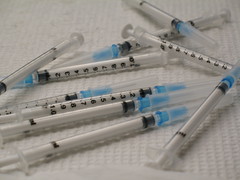
Photo by NathanF

The case for and against immunizing boys against HPV:

YES

Widespread immunization of girls and boys against the human papillomavirus could fully eradicate types 16 and 18 of the virus. If we miss half the equation by leaving the boys out of our vaccination strategy, that type of public health success will not be possible.

The benefits of human papillomavirus (HPV) vaccination in boys are numerous. While protecting women from HPV and the morbidity and mortality associated with cervical cancer is a significant motivation for male vaccination, males would also accrue their own health benefits through vaccination. For example, approximately 12% of oral pharyngeal cancers are caused by HPV types 16 and 18, which also cause some penile and anal cancers. Also, 90% of genital warts are caused by HPV types 6 and 11, which can occur in boys as well as in girls; while not life-threatening, genital warts are certainly anxiety provoking. In addition, one out of four girls and one out of six boys is the victim of sexual abuse by age 20. That's a high number of young people for whom prevention would be relevant.

If we want to achieve herd immunity with HPV, we really need to vaccinate both sexes. There's also a larger message from society in how we choose to formulate our vaccination strategy. If we don't vaccinate boys, we are saying as a society that females alone have the responsibility for society's sexual health.

Men also have a stake in the health of their future sexual partners. While boys may be only 11 or 12 years old when their parents consent to HPV vaccination on their behalf, these boys and their parents will not want their future partners or offspring to be exposed to life-threatening HPV.

The cost-effectiveness estimates for vaccinating boys are not compelling at this point. However, the public health benefit is clear and the medical risks associated with vaccination are extremely low. In fact, the experience with girls in the United States has been excellent, with fewer adverse events reported for the HPV vaccine than for most other common vaccines.


NO[T YET]

The issue of immunizing males against HPV often comes down to whether they should receive the vaccine to protect females. Doing so is honorable and even reasonable, but at this point there is little evidence suggesting that this is cost effective.

Early cost-benefit analyses of this idea showed that a large number of males would need to be immunized to achieve even a minimal increase in protection for females. At the same time, adding males to the equation would significantly increase the cost of the immunization program. So, until there are more compelling data to show that immunizing males will protect large numbers of females, the right thing to do is to immunize the people we are trying to protect—girls and women themselves.

This said, there are other compelling reasons to consider vaccinating males. Newer data are beginning to show that HPV does more in men than might have been appreciated just a decade ago. A significant portion of head and neck cancers, anal cancers, and cancer of the larynx are caused by HPV. When you start adding up the number of cases of cancers in males attributable to HPV, you end up with roughly the same number as that of cervical cancer cases in the United States. Not to be forgotten is the significant morbidity associated with genital warts. So the reasons to immunize males will likely have more to do with protecting males against the diseases they get, rather than protecting women from cancer.

The catch with male immunization is that the studies showing that HPV vaccines prevent these cancers in men do not yet merit changing our vaccination strategy. When the data are available, I expect we will have sound reasons to immunize males against HPV. But studies showing that these vaccines prevent genital warts have not yet been published, and it will be perhaps 3–5 years before we see strong evidence related to cancer prevention benefits.

Labels: , ,

Sunday, November 09, 2008

HPV Vaccination Required For Female Immigrants

Did you know that:

Young women seeking to immigrate to the United States currently are required to be vaccinated against the human papillomavirus, under an amendment to the Immigration and Nationality Act. Under the 1996 amendment, individuals seeking immigrant visas must provide proof of vaccination for all vaccines recommended by the U.S. Advisory Committee for Immunization Practices. This list, which is updated periodically, now includes HPV vaccination for females aged 11-12 years, with catch-up vaccination among those aged 13-26 years. The addition of the HPV vaccine to the list of required vaccines for immigrants was automatic and required by statute, according to Centers for Disease Control and Prevention spokesman Curtis Allen, and was not part of ACIP deliberations when the committee originally recommended use of the HPV vaccine. According to a spokeswoman for Merck, the HPV vaccine Gardasil costs approximately $290-$375 for the three-dose series. The company was not aware of the immigration policy and did not lobby for that provision, she added.

Labels: , ,

Saturday, March 22, 2008

HPV Vaccine Coming to a Woman In Her 30s and 40s Near You


Photo by jared


The FDA has granted a priority review for Merck & Co's application to expand marketing of its Gardasil HPV vaccine to women aged 27 through 45. [Gardasil is currently approved for currently approved for 9 through 26 yo.]

Expect a decision form the FDA within 6 months.

Labels: , , ,

Saturday, February 02, 2008

HPV Vaccine For Boys

Coming [more or less] soon to a doctor near you.

Gardasil HPV vaccine for men
Photo by Ben Scicluna.


Merck plans to seek FDA approval for its quadrivalent Gardasil HPV vaccine in men later this year:

Merck has been testing the vaccine in an international study...focused on anal and penile cancer and genital warts...said Kelley Dougherty, a Merck spokeswoman....No data from Merck's study are available yet.

Labels: , , ,

Thursday, May 31, 2007

No Fast Track Review For Cervarix

LONDON - GlaxoSmithKline PLC revealed Thursday that the U.S. Food and Drug Administration has declined to grant a priority review to its experimental cancer vaccine Cervarix, adding to pressure on the drug maker after controversy surrounding its diabetes drug Avandia.

The FDA ruling means that Cervarix will have to go through a standard 10-month review, instead of a fast-track process that would have accelerated the approval and marketing of the vaccine in the key U.S. market.

Glaxo now expects to get the drug, which targets cervical cancer and is expected to become a multibillion-dollar product, to market in the United States sometime in 2008.

The company applied for U.S. marketing approval in March, hoping to receive a "priority review," which the FDA grants to medicines that represent a significant improvement compared with existing therapies.

Glaxo expects to launch the vaccine in Europe and several other markets in the second half of 2007. It was approved by health regulators in Australia earlier this month.


Gardasil, the vaccine that's already FDA approved, is designed to protect against HPV 6, 11, 16 and 18, while Cervarix is bivalent (HPV 16 and HPV 18).

Labels: , ,

Friday, April 27, 2007

Gardasil Efficacy Update

More good news about Gardasil, one of the HPV vaccines:

ATLANTA — The efficacy of Gardasil is becoming more apparent over time, Dr. Eliav Barr said at a meeting of the Advisory Committee on Immunization Practices of the Centers for Disease Control and Prevention.

Merck is continuing to follow subjects post marketing, with nearly 3 years of data now available from three of the premarketing trials involving more than 18,000 young women.

Among those are 2.4 years for the group that was naive to all four vaccine strains of human papillomavirus (6, 11, 16, and 18) at baseline, 2.9 years for another group that was naive to 14 HPV types, and 2.8 years for a combined group of uninfected and infected women at baseline, said Dr. Barr, program head of HPV Vaccines for Merck Research Laboratories, Blue Bell, Pa.

In the per-protocol investigation comprising only those naive to the vaccine HPV strains, efficacy of the vaccine against HPV 16/18-related cervical intraepithelial neoplasia (CIN) 2/3 or adenocarcinoma in situ (AIS) is 99%, down from 100% at the time of licensure. The drop was the result of just one case of HPV 16/18-related CIN3 in a Gardasil recipient (versus 73 cases in the placebo group). An investigation into that one case determined that it was likely caused by contamination, Dr. Barr said.

Efficacy against HPV 16/18-related vulvar and vaginal intraepithelial neoplasia 2/3 remains at 100%, as it was at licensure. Efficacy against any grade of HPV 16/18-related CIN or AIS is now at 96%, compared with 95% at licensure.

Efficacy continues to increase over time as more cases of HPV 16/18-related disease occur in placebo recipients. Against all vulvar and vaginal lesions, including warts, the vaccine has stayed 99% effective.

It's possible that the few vaccine recipients who did develop lesions—6 CIN/AIS and 2 vulvar/vaginal lesions, compared with 148 and 189, respectively, among placebo recipients—were already infected at baseline, he noted.

In the combined group of those infected and uninfected at baseline, vaccine efficacy is now 41% against CIN 2/3 or AIS (versus 34% at licensure), 71% against vaginal or vulvar intraepithelial neoplasia 2/3 (69% at licensure), 54% against CIN of any grade (46% at licensure), and 78% against vulvar/vaginal lesions including warts, up from 70%.

Preliminary data also suggest cross-protection of the vaccine against lesions caused by nonvaccine strains of HPV. The company plans to present those data later this year.

"The preliminary results are quite encouraging," Dr. Barr commented.

Labels: , ,

Thursday, February 01, 2007

Cervical cancer drops, but disparities persist

Interesting report on cervical cancer demographics (emphasis mine):

NEW YORK (Reuters Health) - In the United States, rates of invasive cervical cancer declined between 1998 and 2002, although significant racial, ethnic, and geographic differences persisted, according to pre-vaccine surveillance data covering 87 percent the population of women.

Altogether, 59,848 cases of cervical cancer cases were identified during the 5-year study period. The annual number of cases fell from 12,720 in 1998 to 11,071 in 2002.

The incidence rate declined from 10.2 per 100,000 women in 1998 to 8.5 per 100,000 in 2002, report Dr. Mona Saraiya from the Centers for Disease Control and Prevention, Atlanta....

For the period as a whole, the average annual incidence rate was highest among Hispanic women (14.8 per 100,000), followed by African American women (13.5 per 100,000). Rates among Asian or Pacific Islander women and white women were similar (8.9 per 100,000).

"We confirmed that in the United States there is a 50 percent higher incidence of cervical cancer among African-American (compared with white) and 66 percent higher incidence among Hispanic women (compared with non-Hispanic)," note the authors.

Cervical cancer rates rose with age for all groups. Among Hispanic women 40 years or older rates were 26.5 or more per 100,000; among African American women older than 50 years rates were 23.5 or more per 100,000 women.

"Our findings confirm the need to continue screening older women as recommended by guidelines and to find better strategies for access to screening of women of color," Saraiya and colleagues note.

There is evidence that suggests that the difference in cervical cancer incidence among African American, Hispanic, and white women may be due "in substantial measure, to differences, by race, in the follow up of abnormal Pap tests."

There were also geographic differences in cervical cancer rates, with higher rates of squamous cell carcinoma - the most common type of cervical cancer -- seen in the South than in other regions.

"Clearly, our approach to preventing cervical cancer in the United States should include more focused attention on pockets of high risk," the team notes.

Introduction in 2006 of a vaccine for human papillomaviruses (HPV), which cause most cases of cervical cancer, gives doctors "an additional tool" to reduce illness and death from cervical cancer. When administered appropriately, the HPV vaccine can prevent about 70 percent of all cervical cancers in this country and worldwide, they point out.

The surveillance system in place in the U.S., Saraiya's team adds, will provide a consistent means of measuring trends in the incidence of invasive cervical cancer in the post-cervical cancer vaccine era, although the effect of the vaccine may not be seen for two decades.

Labels: , , ,

Monday, September 04, 2006

HPV Vaccines Offer Additional Protection

More good news about the HPV vaccine. Both Cervarix and Gardasil have been found to be effective against addition HPV strains:

The [Cervarix] vaccine is used against HPV 16 and HPV 18, the commonest cause of the disease.

However, in trials the vaccine has also been effective against two other HPVs, 45 and 31, the third and fourth most common strains.

...

Yesterday the conference heard of new results from a rival vaccine, Gardasil, made by Merck and to be marketed in the UK by Sanofi Pasteur.
Gardasil is designed to protect against HPV 6, 11, 16 and 18 and the results reported yesterday suggest that it is also effective against 31, 45, 52 and 58.

Margaret Stanley, professor of epithelial biology at the University of Cambridge, said: "These data are very exciting as they show that Gardasil may potentially provide some protection against additional cancer-causing human papillomavirus strains to those specifically targeted by the vaccine.

"This means there is the potential that it could protect against strains which are responsible for approximately 85 per cent of cervical cancers."

Labels: , , ,

Wednesday, June 14, 2006

Merck's Ad Miss Is Digene's Hit

By now you know that Merck's Human Papillomavirus (HPV) vaccine Gardasil has received FDA approval. But did you also know that the TV ad where a group of women expresses surprise at the link between the human papilloma virus (HPV) and cervical cancer is Merck's? Until recently, I had no idea. Not only did I not connect it with Merck, I was convinced it must be an ad sponsored by Digene, the maker of the HPV DNA Test. Each time I saw the ad, I gave Digene a couple of points for doing a good job of educating the public, and raising HPV awareness.

Which brings me to Digene's thehpvtest.com. The company's PR people sent me the link, and, as you would expect, it's a site with information on why having the HPV test could be beneficial for you. I checked it out and it's a good, first step, resource. [More on HPV testing as an adjunct to Pap smear screening here.]

The one thing I do want you to take a look at, and pay particular attention to, is this depiction of dysplastic (abnormal) cells, in particular the degree of dysplasia.


As we've discussed, the viral particles penetrate the genital skin and mucosal surfaces through small abrasions. Once inside the cell, the virus causes abnormal changes in the host cell (dysplasia). The dysplasia can be low-grade, or high grade. [Notice the difference in the location of the abnormal cells--part of the thickness vs. full thickness.] Also, look at the difference in abnormal cell distribution between a precancerous condition (panels 2 and 3) and cancer (panel 4, lower right corner). From a treatment perspective, as long as the basement membrane is intact [precancerous condition], you can use a local method to "treat" the abnormal cells [by destroying/removing the affected tissue]. Keep these illustrations in mind when you discuss the results of a Pap/HPV test with your Ob/Gyn.

More on HPV DNA testing here, here, and here.

Labels: , , ,

Saturday, April 29, 2006

Reproductive Health Risks

Interesting article on reproductive risks by Dr. Trussell in Contraception. [Not sure if you can access the article without a subscription, so I'll quote in full.]:

Volume 73, Issue 5, Pages 437-439 (May 2006)

Reproductive health risks in perspective

James Trussell

Beth Jordan

Dramatic headlines about women's health — deaths of women using the OrthoEvra patch, for example, or after medication abortion — can quickly lead patients and healthcare practitioners into a state of panic and uncertainty over the appropriate course of action to take. Should therapy be continued or not? What is the real risk of death?

Alarmist, misleading, inaccurate or incomplete media coverage is certainly a source of confusion, but such stylized reporting is not likely to be eliminated from most large media outlets in the near future. That fact, coupled with the lack of courses in biostatistics and risk-assessment analysis in most medical training programs and the reality that health professionals have little time to counsel patients about the risks of various treatments, can lead patients to make poor health-related choices.

This danger is particularly worrisome when patients are dealing with contraceptive issues and the threat of an unplanned pregnancy. Doctors, nurses and other providers have little time to investigate and consolidate risk-related information for their patients, and patients have few resources available to help them ascertain the risks from using various contraceptive methods. The brief summary provided here is intended to help inform clinicians and their patients of the risk of death from pregnancy, abortion and the use of various forms of hormonal contraception, as well as from other voluntary activities.

In general, contraceptives pose few serious health risks to users. Moreover, the use of contraceptive methods is generally far safer than pregnancy. Unintended pregnancies unnecessarily place women at risk. Women in many developing countries will experience an even greater advantage in using contraceptive methods than those in the developed world in comparison with pregnancy-related mortality. Nonetheless, use of some contraceptive methods may entail potential risks.

• Use of the method may lead to serious outcomes such as death, hospitalization, surgery, medical side effects, infections, loss of reproductive capacity or pain.

• Contraceptive failure (pregnancy) is associated with risk: a woman must assess the likelihood of contraceptive failure and the dangers that a pregnancy would pose.

• Future fertility may be influenced by choice of a contraceptive method.

When it comes to the most serious outcome of all — death — the absolute level of risk is extraordinarily low for most women. Table 1 puts into perspective some of the risks of everyday life in the United States [1–9]. Other major health risks from contraceptive use are not only uncommon, but they are also most likely to occur in women who have underlying medical conditions.


Table 1.

Everyday risks in perspective

ActivityRisk of deathSource
Risk per year
While skydiving1 in 1000Laudan [1]
From an accident1 in 2900
From an automobile accident1 in 5000
From a fall1 in 20,000
From a fire1 in 50,000
From riding your bicycle1 in 130,000
In an airplane crash1 in 250,000
From being struck by lightning1 in 2,000,000
Risk per year for women preventing pregnancy
Using OCs Schwingl et al. [2]
Nonsmoker
Aged 15–34 years1 in 1,667,000
Aged 35–44 years1 in 33,300
Smoker
Aged 15–34 years1 in 57,800
Aged 35–44 years1 in 5200
Undergoing tubal sterilization1 in 66,700Escobedo et al. [3]
Risk per year from using tampons1 in 5,734,000Hajjeh et al. [4]; U.S. Census Bureau [5]
Risk from pregnancy1 in 8700Berg et al. [6]
Risk from spontaneous abortion1 in 142,900Saraiya et al. [7]
Risk from legal induced abortion
Mifepristone/misoprostol1 in 110,000Summers [8]
Surgical1 in 142,900Bartlett et al. [9]
≤8 weeks1 in 1,000,000
9–10 weeks1 in 500,000
11–12 weeks1 in 250,000
13–15 weeks1 in 58,800
16–20 weeks1 in 29,400
≥21 weeks1 in 11,200


Pregnancy

The risk of death from pregnancy and delivery is about 1 in 8700, lower than the annual risk of death from an automobile accident but higher than the annual risk of death from use of combined oral contraceptives (OCs) for all women except those aged 35–44 years who smoke and higher than the risk of death from abortion, even at gestational ages ≥21 weeks.

Combined OCs

Combined OCs have been associated with an increased risk of myocardial infarction (MI) and stroke. Smoking definitely increases the risk of MI, especially in women older than 35 years. However, nonsmoking, normotensive, nondiabetic women of any age who use combined OCs are not at increased risk for MI. The risk of stroke in nonsmoking women younger than 35 years is not increased by use of OCs with less than 50 μg of estrogen [10]. The risk of venous thromboembolism is increased by combined OC use, but the absolute risk of this increase is quite low among women who use OCs with less than 50 μg of estrogen, ranging from 9 events per 100,000 women-years of exposure among those aged 20–24 years to 18 events per 100,000 women-years of exposure among those aged 40–44 years [10].

Use of combined OCs is associated with a decreased risk of cancers of the endometrium and ovary and an increased risk of cancer of the cervix and liver, a small increased risk of breast cancer in young women and a decreased risk of colorectal cancer [10]. However, there is great uncertainty regarding the causal link, if any, between combined OC use and liver and colorectal cancer [10], and recent evidence suggests no association between current or former combined OC use and breast cancer [11]. Regardless, the net effect of pill use on cancer is negligible [10].

Persistent infection with certain types of human papillomavirus (HPV) is the most frequent cause of cervical cancer. However, the incidence of cervical cancer is increased in women using OCs, particularly long-term users, even among women infected with HPV; this risk increases as duration of use increases [12]. Results from limited data also suggest a slight increase in the risk of cervical cancer among women who use injectable contraceptives for 5 years or longer [12].

Analysis of pooled data from 54 epidemiologic studies conducted in 25 countries found that women have a slightly increased risk (about 25% higher) for having breast cancer diagnosed while they are using OCs. Cancers diagnosed in these women are less advanced clinically than those diagnosed in women of the same age who have never used OCs [13]. The increased risk is apparent soon after pill use begins but does not increase with duration of use, declines after use ceases and does not persist beyond 10 years after exposure ceases. These patterns are not typical for a carcinogenic agent but would be consistent with promotion of already existing tumors or with earlier diagnosis of breast cancer in women who have used the pill. A more recent study in the United Sates found that among women aged 35–64 years, current or former combined OC use is not associated with an increased risk of diagnosis of breast cancer [11].

OrthoEvra patch

The OrthoEvra patch has been recently highlighted in the press after the Food and Drug Administration (FDA) announced a label change in October 2005. The change includes a bolded "warning" indicating that use of the patch entails a 60% higher exposure to estrogen than use of a typical combined OC containing 35 μg of estrogen; however, the FDA states that the clinical relevance of this finding is unknown [14].

The actual risk of death from patch use is impossible to determine. Spontaneous reports of deaths of women using the patch have been received by the FDA. Spontaneous reports to the FDA can come from various sources, and the quality and extent of the information reported vary considerably. It is often unclear whether a death is causally related to use of a drug. Moreover, even if the intensive follow-up was to establish that a certain number of deaths were likely to have been caused by use of that drug, there remains the problem of computing an accurate mortality rate because the relevant denominator is also not known. Therefore, it is not possible to know at this time how the mortality risk from use of the patch compares with that from use of combined OCs [15].

Abortion

The risk of death is about the same from medication abortion and from surgical abortion; however, the risk of death from surgical abortion is greatest for higher gestational ages where medication abortion is not used. Nevertheless, induced abortion is safer than continuing pregnancy and entails about the same risk as spontaneous abortion.

Conclusion

As sensationalized news reporting becomes more common and thoughtful analysis becomes more difficult to find, given its perceived lack of appeal to media observers, healthcare practitioners must intensify efforts fully and repeatedly to inform patients of their true risks of death from various contraceptive methods. This imperative is particularly important as the FDA has become extremely sensitive regarding drug safety warnings.

Women are far more likely to die from pregnancy-related complications, from automobile accidents or from a fall than they are from using hormonal contraception or having undergone either a medication or surgical abortion. Those who claim that hormonal contraception and abortion are unsafe base this assertion on ideology, not evidence-based science. The evidence in Table 1 shows otherwise.


References

1. Laudan L. The book of risks. New York: John Wiley and Sons; 1994;.

2. Schwingl PJ, Ory HW, Visness CM. Estimates of the risk of cardiovascular death attributable to low-dose oral contraceptives in the United States. Am J Obstet Gynecol. 1999;180:241–249. Abstract

3. Escobedo LG, Peterson HB, Grubb GS, Franks AL. Case-fatality rates for tubal sterilization in U.S. hospitals, 1979–1980. Am J Obstet Gynecol. 1989;160:147–150. MEDLINE

4. Hajjeh RA, Reingold A, Weil A, Shutt K, Schuhat A, Perkins BA. Toxic shock syndrome in the United States, 1979–1996. Emerg Infect Dis. 1999;5:807–810. MEDLINE

5. U.S. Bureau of the Census . Statistical abstract of the United States: 2003. Washington (DC): Government Printing Office; 2003;[Table 11].

6. Berg CJ, Chang J, Callaghan WM, Whitehead SJ. Pregnancy-related mortality in the United States, 1991–1997. Obstet Gynecol. 2003;101:289–296. MEDLINE

7. Saraiya M, Green CA, Berg CJ, Hopkins FW, Koonin LM, Atrash HK. Spontaneous abortion-related deaths among women in the United States — 1981–1991. Obstet Gynecol. 1999;94:172–176. MEDLINE

8. Personal communication from Danco Laboratories, C Summers. 9 March 2006.

9. Bartlett LA, Berg CJ, Shulman HB, et al.. Risk factors for legal induced abortion-related mortality in the United States. Obstet Gynecol. 2004;103:729–737. MEDLINE

10. Burkman R, Schlesselman JJ, Zieman M. Safety concerns and health benefits associated with oral contraception. Am J Obstet Gynecol. 2004;190(Suppl):S5–S22. Abstract

11. Marchbanks PA, McDonald HG, Wilson HG, et al.. Oral contraceptives and the risk of breast cancer. N Engl J Med. 2002;346:2025–2032.

12. [12]Smith JS, Green J, Berrington de Gonzalez A, et al.. Cervical cancer and use of hormonal contraceptives: a systematic review. Lancet. 2003;361:1159–1167. Abstract

13. Collaborative Group on Hormonal Factors in Breast Cancer . Breast cancer and hormonal contraceptives: collaborative reanalysis of individual data on 53,297 women with breast cancer and 100,239 women without breast cancer from 54 epidemiological studies. Lancet. 1996;347:1713–1727. MEDLINE

14. Ortho-McNeil Pharmaceutical. Ortho Evra Product labeling. Revised November 2005.

15. Media report on Ortho Evra patch sets off safety concerns in women. Contracept Technol Update. 2005;26:113–115.

Labels: , , , , , ,